
The Miracle of February: Witnessing Hawksbill Hatchlings on Cousine Island
As February arrives in the Seychelles, something extraordinary unfolds on the pristine shores of Cousine Island. Beneath the warm sands, thousands of tiny hawksbill sea turtles are preparing for the most important journey of their lives—the first steps from nest to ocean.
This annual miracle is not merely a tourist attraction; it is the culmination of more than three decades of dedicated conservation work. For guests fortunate enough to witness it, the experience becomes a profound connection to the natural world and a reminder of what committed stewardship can achieve.
Why February Is the Best Time to See Turtle Hatchlings in Seychelles
The Seychelles archipelago is one of only three places in the world where female hawksbill turtles nest during daylight hours. On Cousine Island, the nesting season spans from September through mid-March, with February offering optimal conditions for witnessing hatchling emergences.
According to our Eco-Calendar, February brings temperatures between 25°C and 31°C, with calm to lively seas and excellent underwater visibility. The conditions are ideal for all water activities, including diving and snorkelling, making it the perfect month for guests who wish to combine wildlife encounters with marine exploration.
Most importantly, February offers a high chance of seeing turtle hatchlings emerge. The eggs laid in late October and November are reaching the end of their approximately 60-day incubation period, creating daily opportunities to witness these remarkable moments.
Hatchlings are counted and measured by the Cousine Island conservation team
Three Decades of Sea Turtle Conservation
Cousine Island has been protecting, monitoring, and recording the nesting activity of hawksbill sea turtles for more than 32 years. This is not incidental tourism—it is a fundamental part of the island's identity as a private conservation sanctuary.
The numbers tell a powerful story. During this time, the conservation team stationed on the island has helped more than 200,000 hawksbill hatchlings reach the sea. Each turtle season, more than 12,000 turtle hatchlings emerge from nests laid on the beach and make their journey to the ocean under the watchful eyes of the conservation team.
This is particularly significant because hawksbill turtles are currently categorised as critically endangered on the IUCN Red List of Threatened Species. Illegally hunted for their beautiful shells and threatened by marine pollution, they face an extremely high risk of extinction in the wild. Every hatchling that reaches the water represents hope for the species.
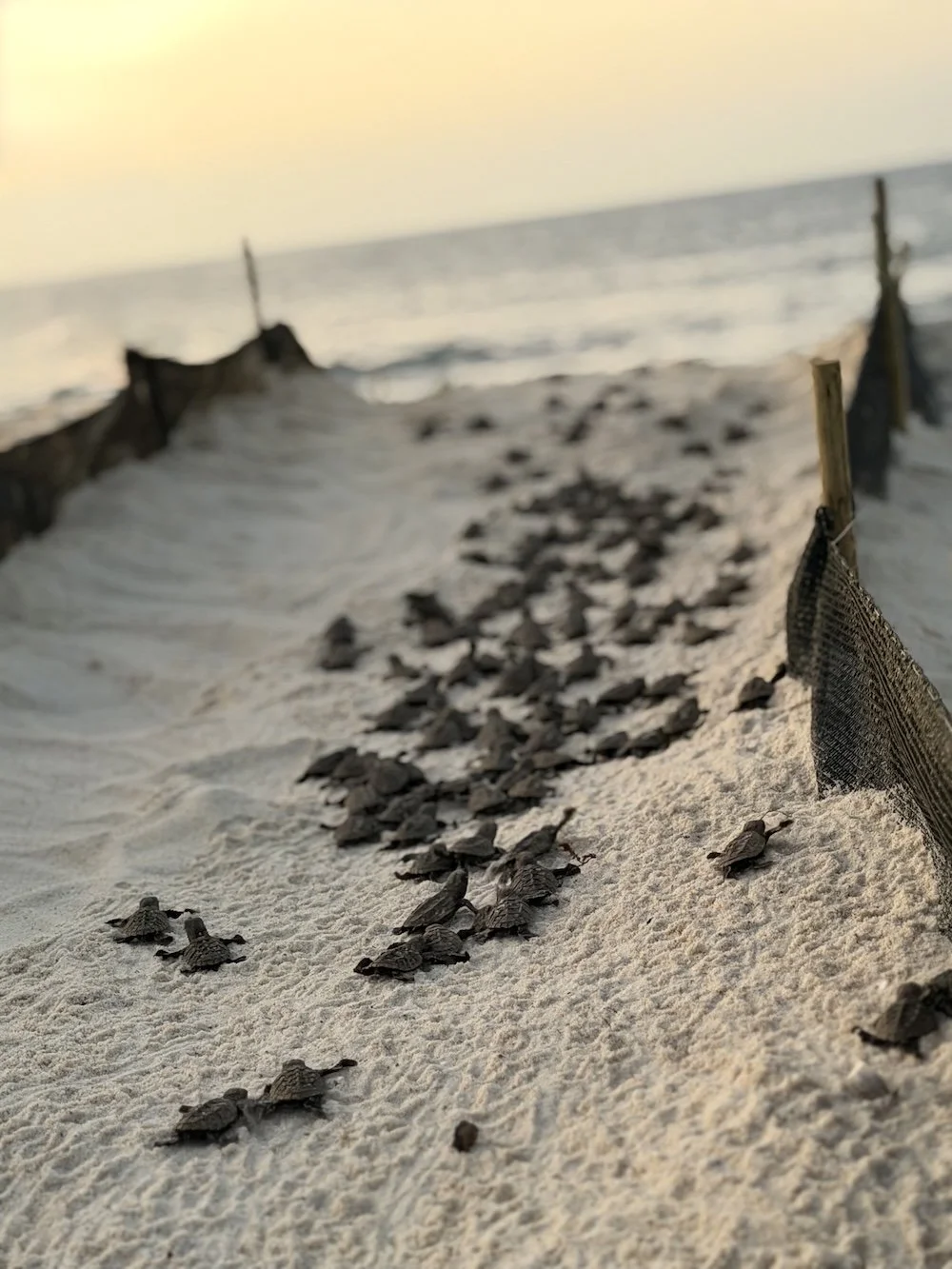
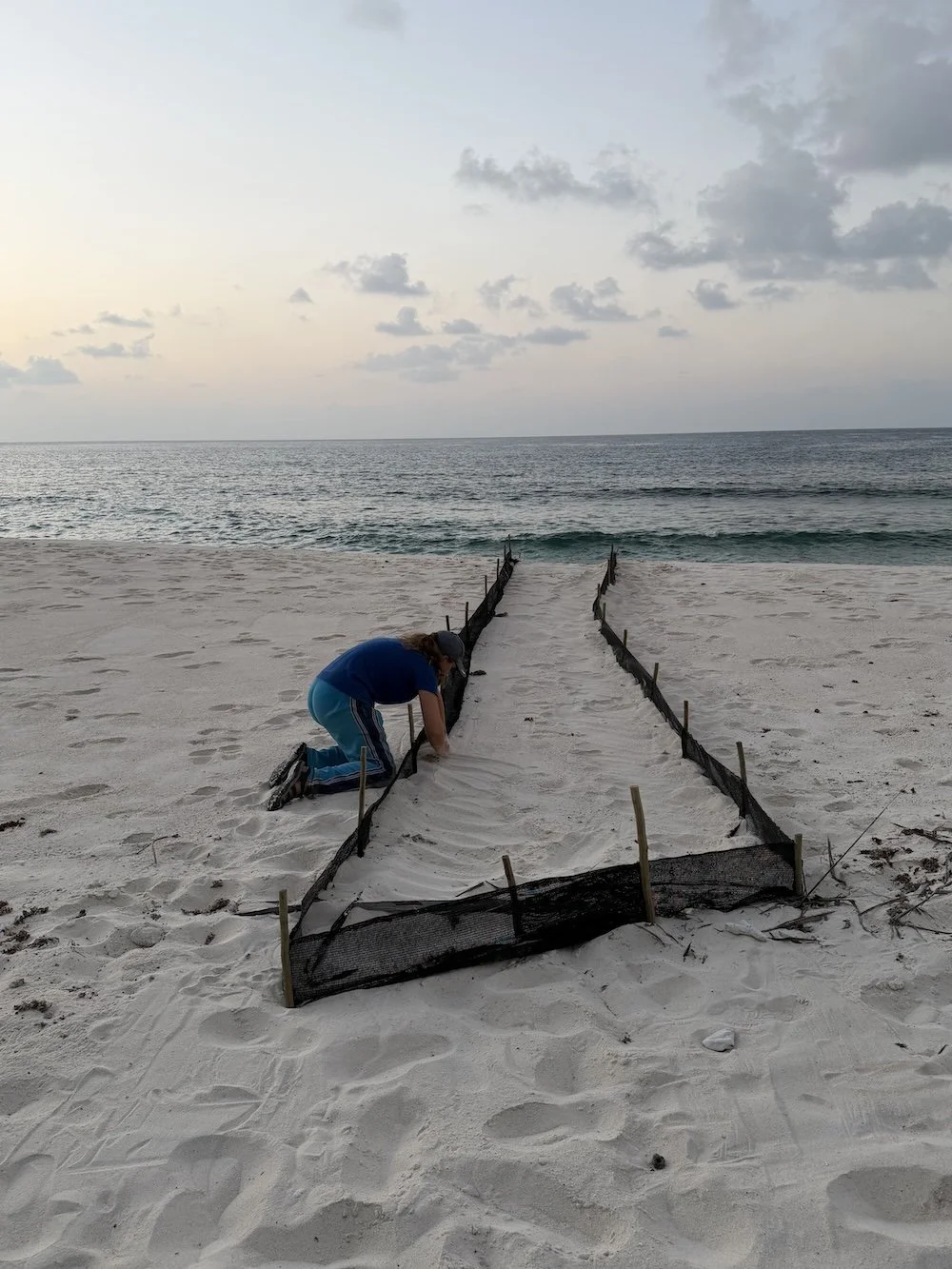
Hatchlings are gently released into the guided path towards the waves
What to Expect During Your Hatchling Experience
Guests on Cousine Island can participate in turtle patrol and hatchling release as a complimentary activity included with every stay. The experience is thoughtfully designed to be both profound and respectful of these delicate creatures.
The dedicated conservation team closely monitors all nests and alert guests when emergences are imminent. You may find yourself called to the beach at dawn or dusk—the times when hatchlings most often emerge—to witness the spectacle firsthand.
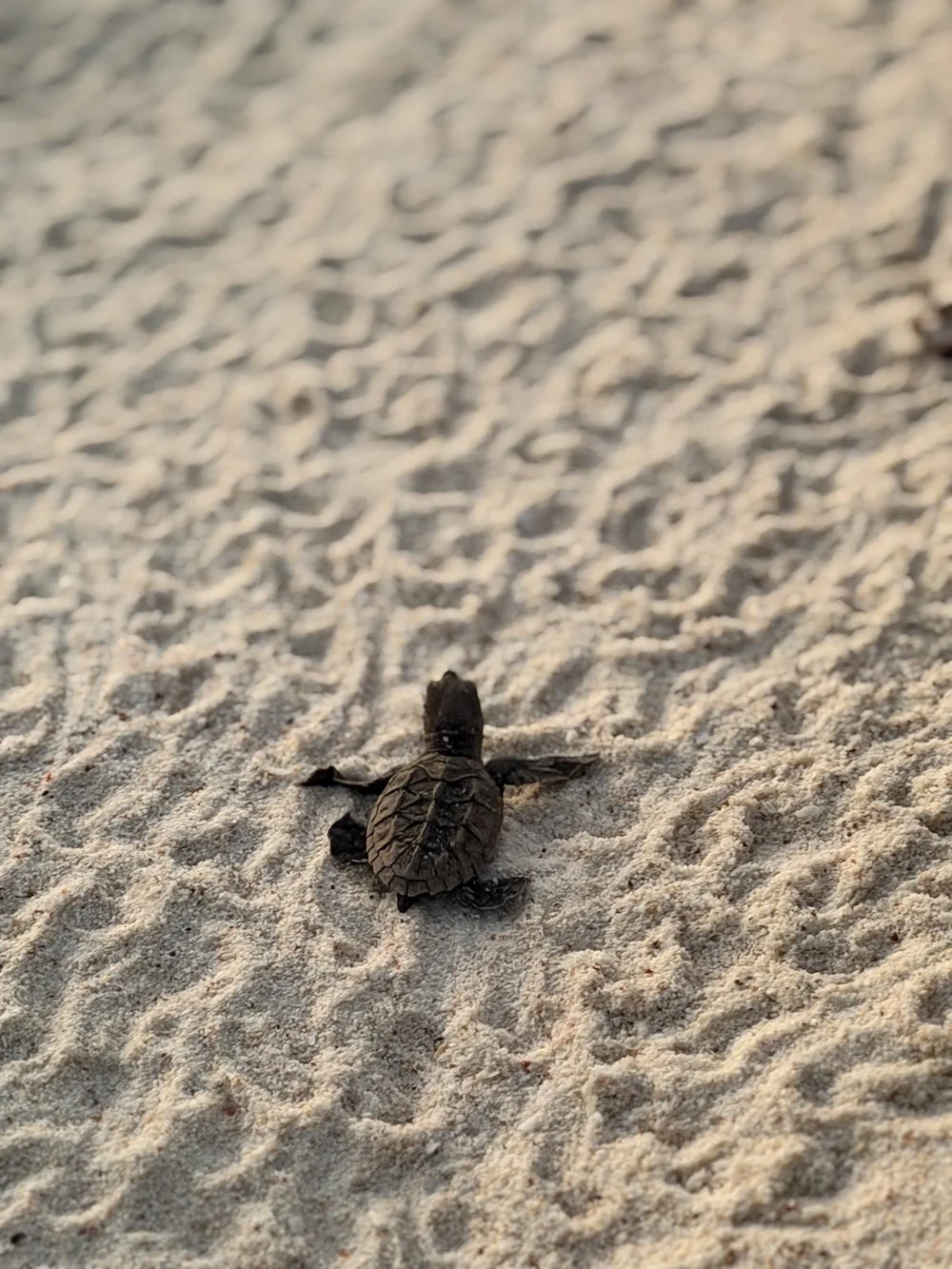
Under the guidance of experienced conservationists, guests observe as dozens of tiny turtles—each weighing just a few grams—dig their way out of the sand and orient themselves toward the ocean. The team ensures safe passage, protecting the hatchlings from predators and obstacles as they make their determined journey to the water.
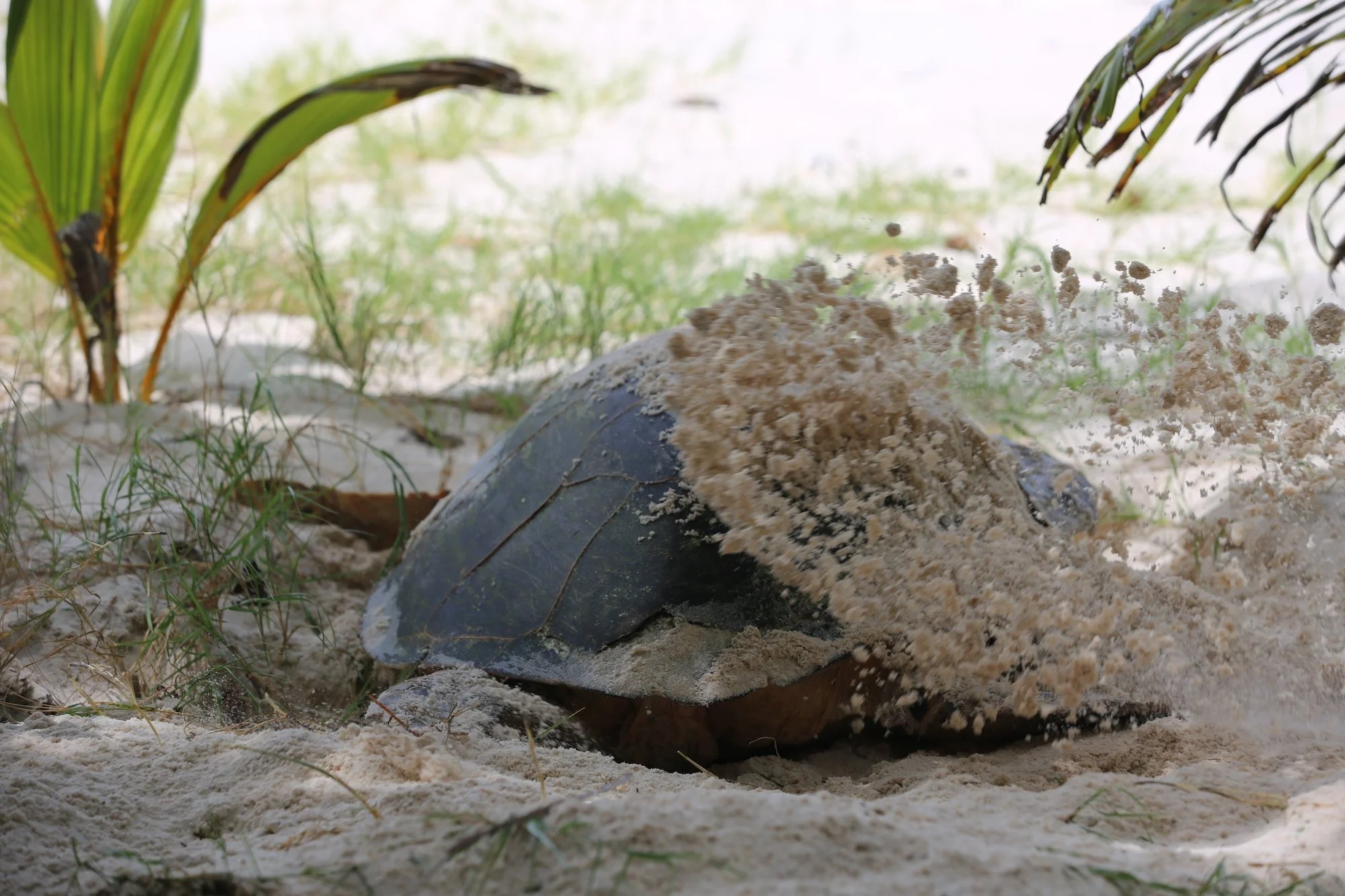
Female Hawksbill turtle nesting on Cousine Island
The Journey from Nest to Ocean
A Once-in-a-Lifetime Encounter
Hawksbill turtles display remarkable site fidelity—female turtles return to their natal beaches to nest, sometimes travelling thousands of kilometres to reach the same shores where they themselves hatched. This means the hatchlings you watch disappear into the waves may return to Cousine Island 20 to 40 years from now to continue the cycle.
Female hawksbills lay approximately four times within a given season at intervals of roughly 15 to 18 days. Each clutch contains around 160 eggs. The mathematics of survival are humbling: only a fraction of these hatchlings will survive to adulthood. Yet each one that makes it to the sea carries the genetic legacy of countless generations.
For guests, watching this ancient ritual unfold is profoundly moving. There is something deeply humbling about standing on a beach in the pre-dawn light, watching creatures that have remained essentially unchanged for 100 million years begin a journey that their ancestors have made since the age of dinosaurs.
Conservation Statistics
Making a Real Difference
Key conservation achievements on Cousine Island:
200,000+ hawksbill hatchlings helped to reach the sea
12,000+ hatchlings emerge each turtle season
32+ years of continuous turtle monitoring and research
Female turtles tagged and tracked across multiple nesting seasons
One of three locations worldwide where hawksbills nest during daylight
The conservation team records tag numbers, shell dimensions, egg numbers, and nest conditions for every nesting female, contributing to global understanding of hawksbill populations and behaviours.
Plan Your Hatchling Season Escape with the Revive Package
For guests seeking to witness the hawksbill hatchling phenomenon while enjoying the full luxury of a private island experience, the Revive Package offers the perfect opportunity.
Revive Package Highlights:
Stay 7 nights, pay for only 6
Additional 10% discount on your stay
Complimentary champagne and tropical fruit basket
One free massage per person
All meals included: breakfast, lunch, and dinner
Complimentary turtle tracking and hatchling release experiences
Seven nights allow ample time to experience multiple hatchling emergences, enjoy guided nature walks, explore the coral reefs, and fully immerse yourself in island life.
With only five luxury villas on the entire island, you are assured complete privacy and personalised attention from our conservation and hospitality teams.
Ready to witness nature's miracle?