Nature in Motion: The Mystery of the Shifting Sands
We often think of islands as static landmarks, fixed points of rock and sand in an ever-changing ocean. But Cousine Island challenges this perception. If you visit us during the transition between years, you will witness a landscape that is quite literally alive.
January marks the peak of a fascinating geological ballet known as the “shifting sands.” It is a time when the island redraws its own map, reminding us that in the Seychelles, nature is the ultimate architect.
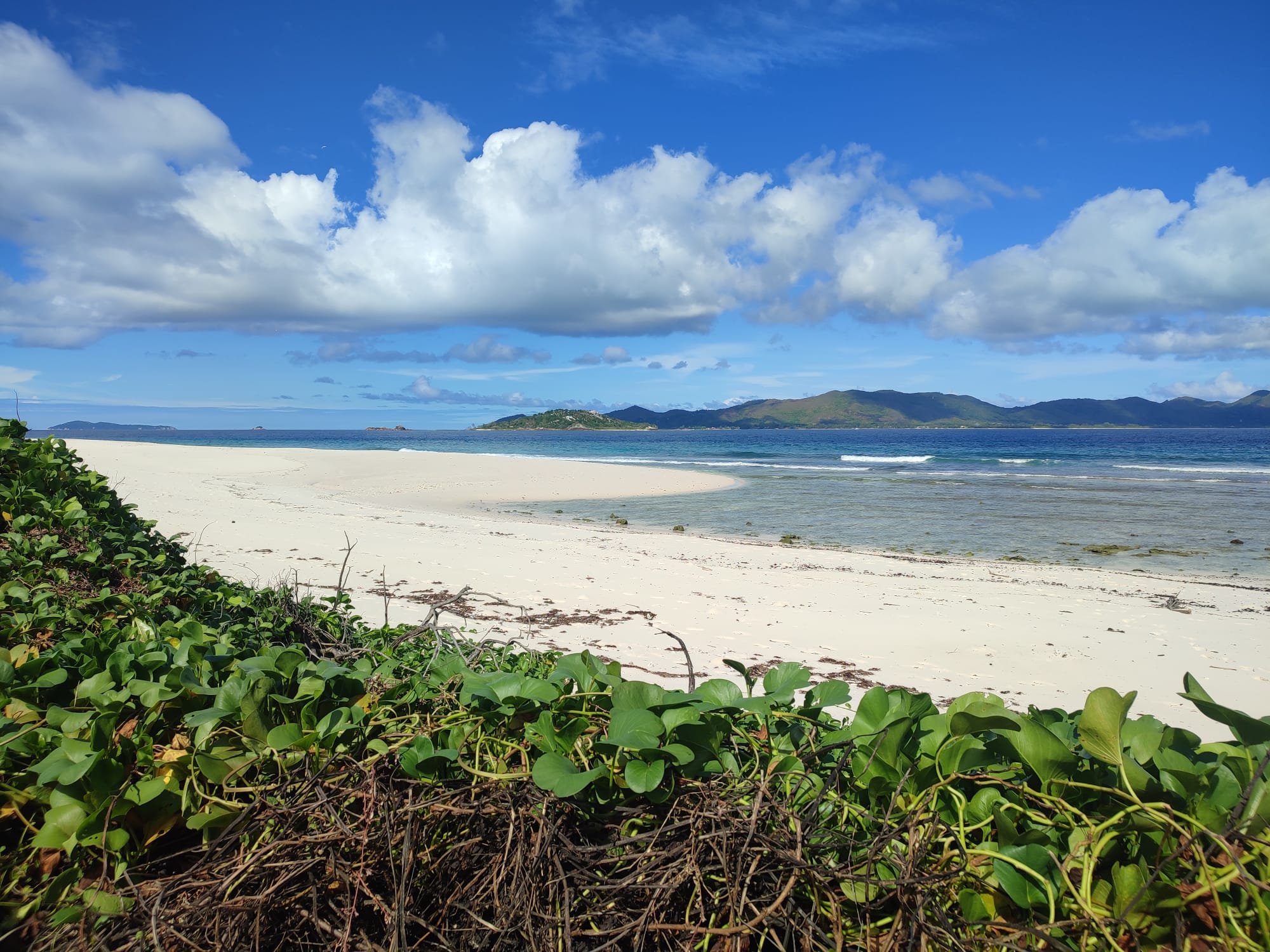
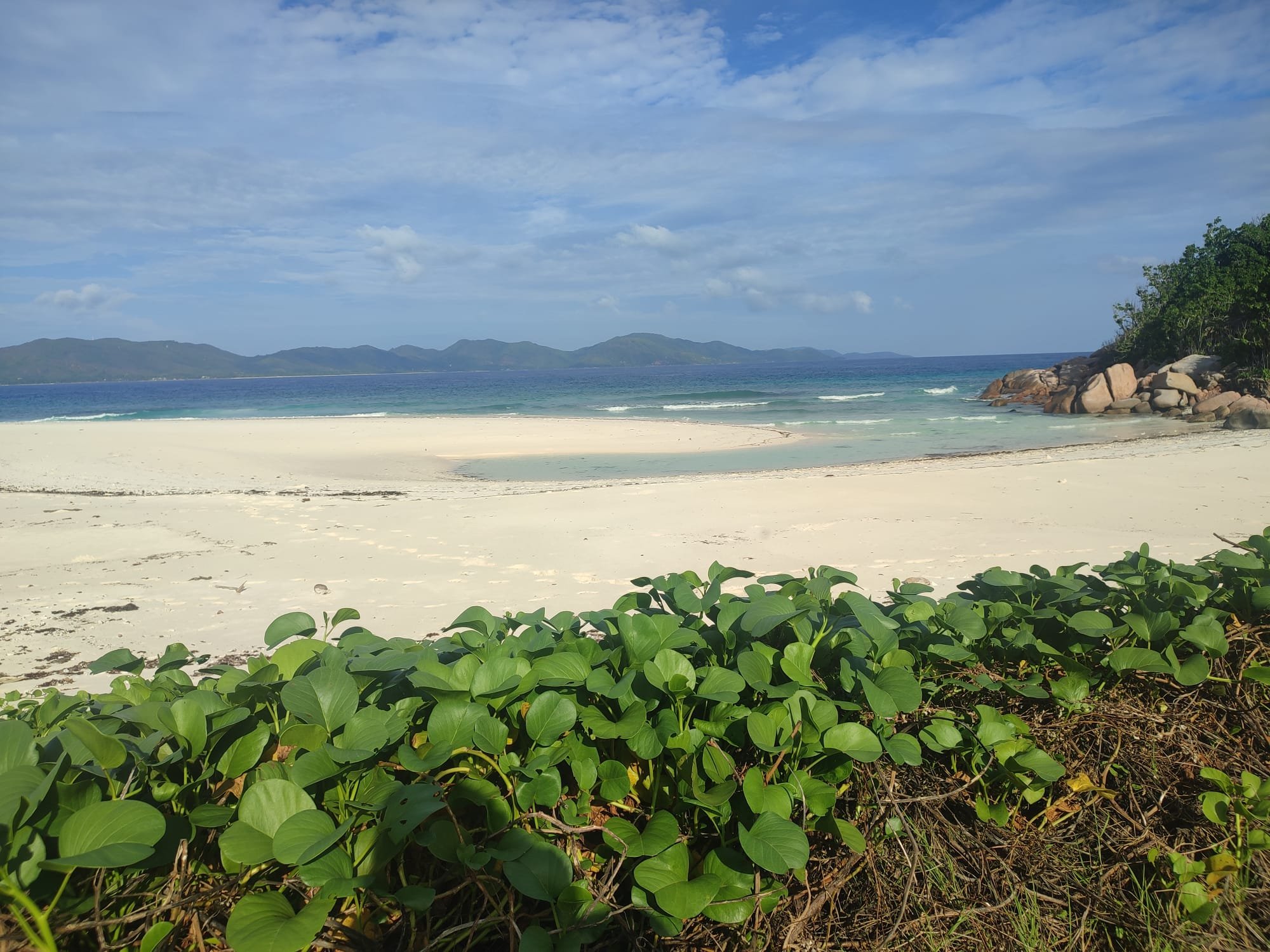
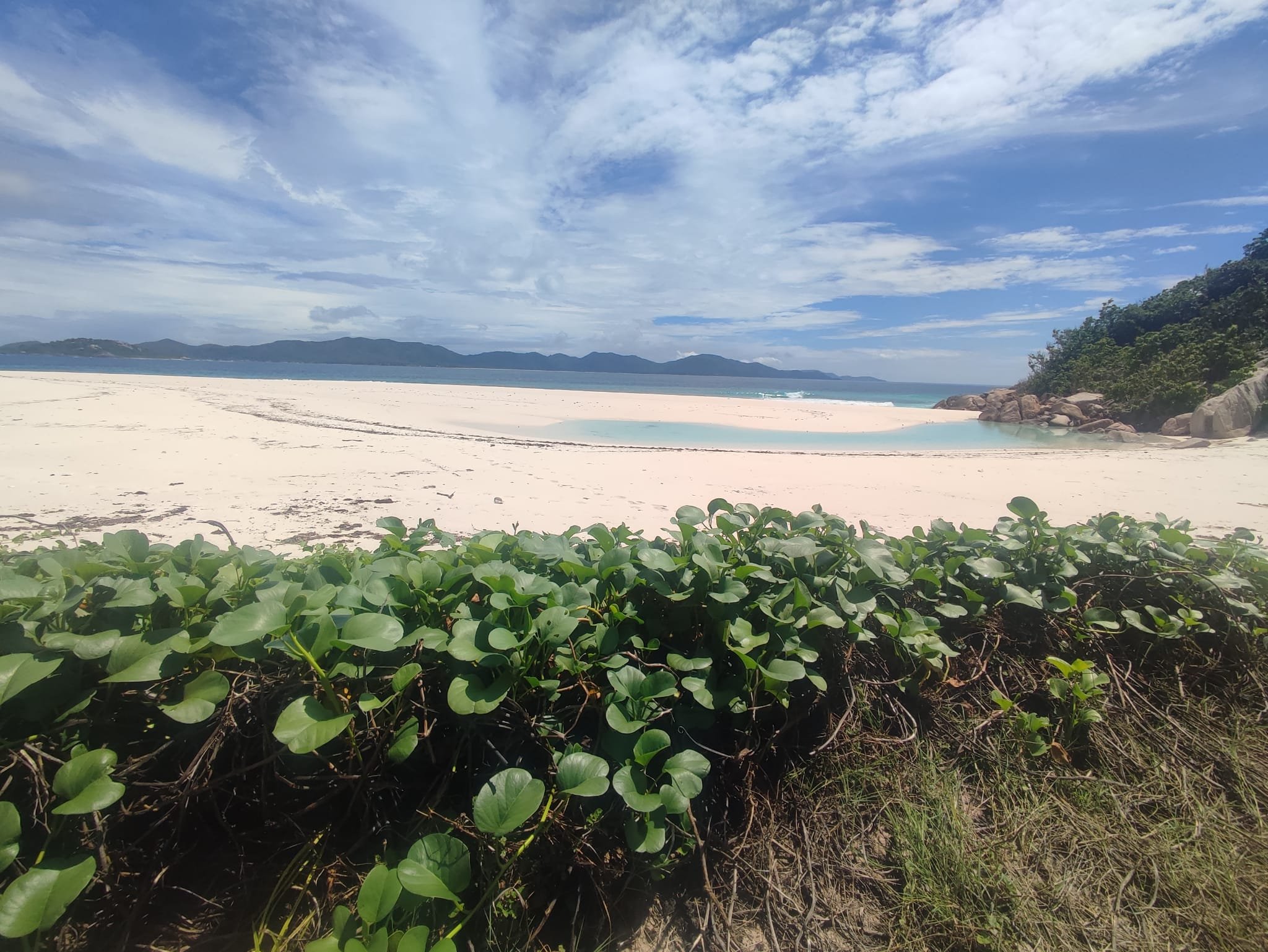
North beach viewed on 18 Dec 2025
The Dance of the Elements
This dramatic transformation is driven by the Northwest Monsoon. As the prevailing winds and currents shift direction in December and January, they begin to sculpt the coastline with powerful precision.
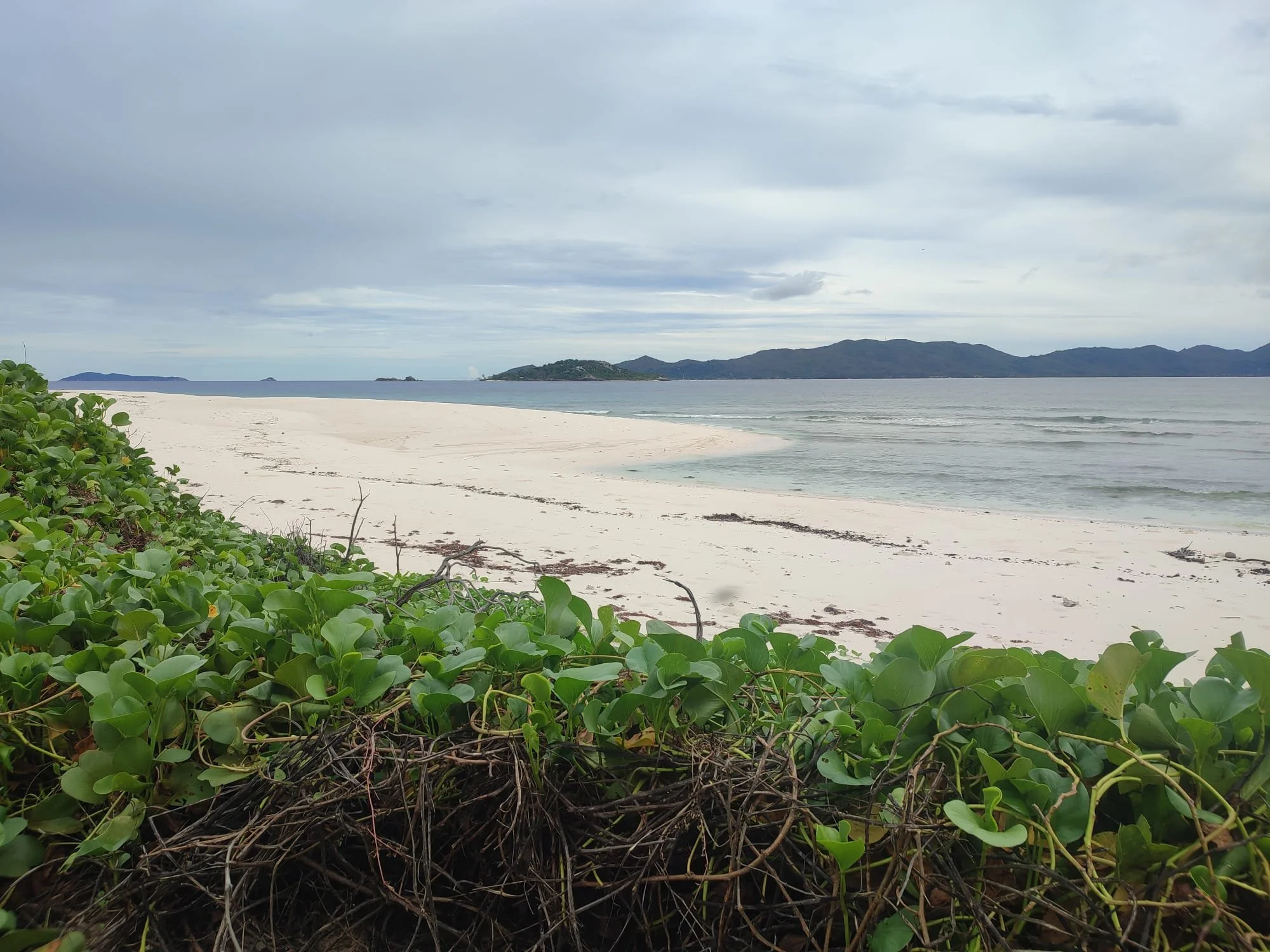
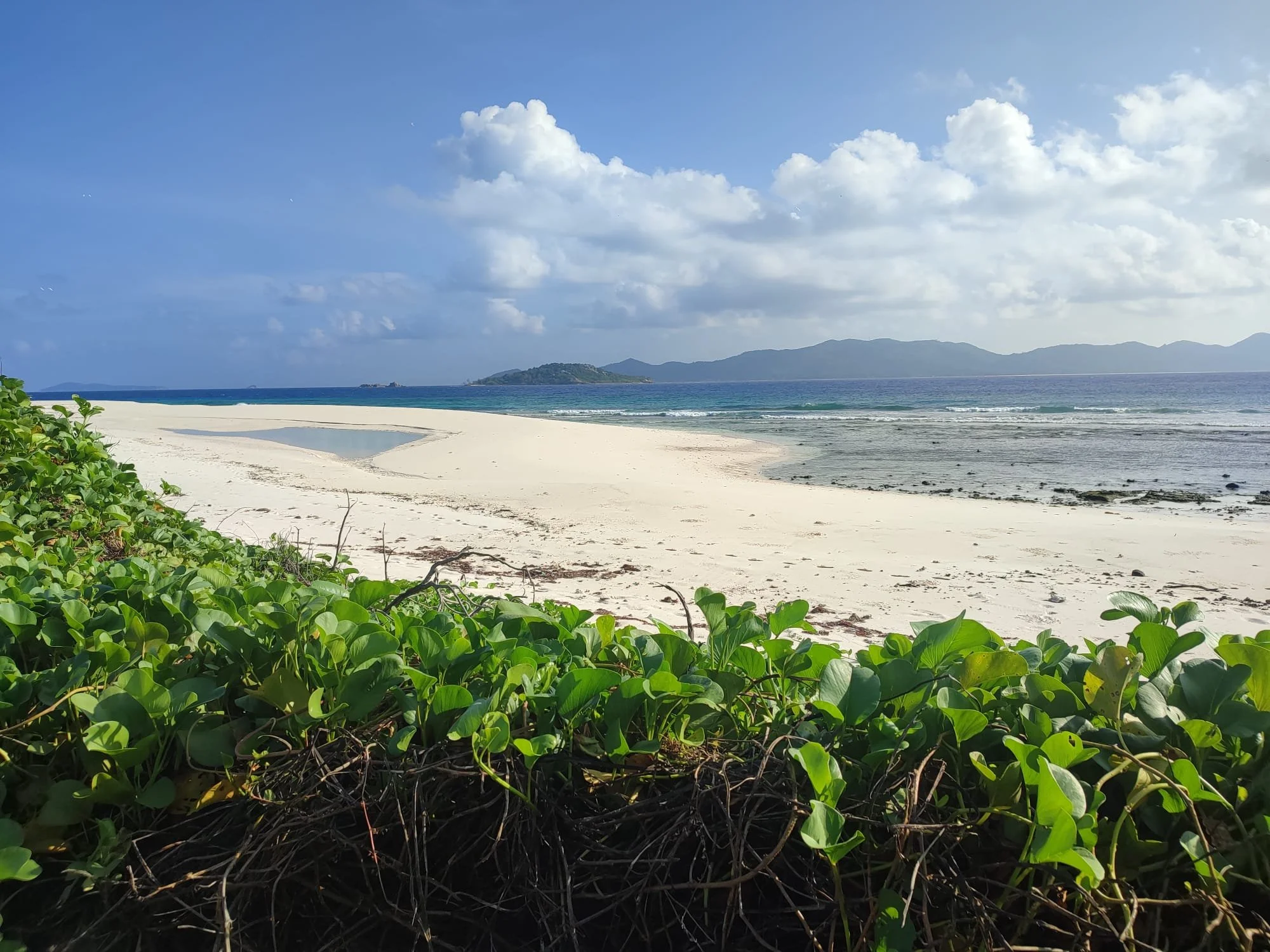
The ocean currents, now pushing from the northwest, cut away the soft white sand from the northern side of the beach, near the guest villas. Grain by grain, this sand is carried through the water and deposited on the southern side of the island.
It is a visible migration of the landscape. Where there was once a wide expanse of beach in front of the villas, ancient granite rock formations may be temporarily revealed. Meanwhile, the southern shores expand, creating new, pristine stretches of powder-soft sand that seem to appear overnight.
Conservation on the Edge
While this seasonal metamorphosis is a wonder to behold, it presents a unique challenge for our conservation team, specifically regarding our Hawksbill sea turtles. Turtles often lay their nests on the northern beaches earlier in the season. As the sands begin to shift in January, these nests face the risk of being exposed or washed away by the encroaching tide.
This dynamic environment is the primary reason for our Sea Turtle Hatchery. Our conservation managers constantly monitor the “erosion line.” When a nest is identified in a high-risk zone, it is carefully excavated and relocated to the safety of the hatchery. It is a delicate balance of respecting the island's natural rhythms while intervening just enough to ensure the survival of the next generation.
A Landscape Reborn
For our guests, the shifting sands offer a rare opportunity to see geology in action. It creates a rugged, raw beauty on the northern coast and a new, untouched paradise on the south.
By the time the Southeast Trade Winds returns later in the year, the process will reverse, and the sand will migrate back, covering the rocks and restoring the beach to its former shape. It is an eternal cycle of renewal, a reminder that on Cousine Island, no two visits are ever the same.
Experience the raw beauty of a dynamic island. Contact our reservations team to plan your stay and learn more about our seasonal landscapes and conservation efforts starting with our eco-calendar.